
Paella Technique: From Sofrito to Socarrat
Most people who've eaten a bad paella can't tell you exactly what went wrong. It just tasted flat, or the rice was mushy, or there was no crust at the bottom worth fighting over. The truth is that paella isn't one skill — it's three, stacked on top of each other, and skipping any one of them shows up in the final plate. Here's what those three actually involve.
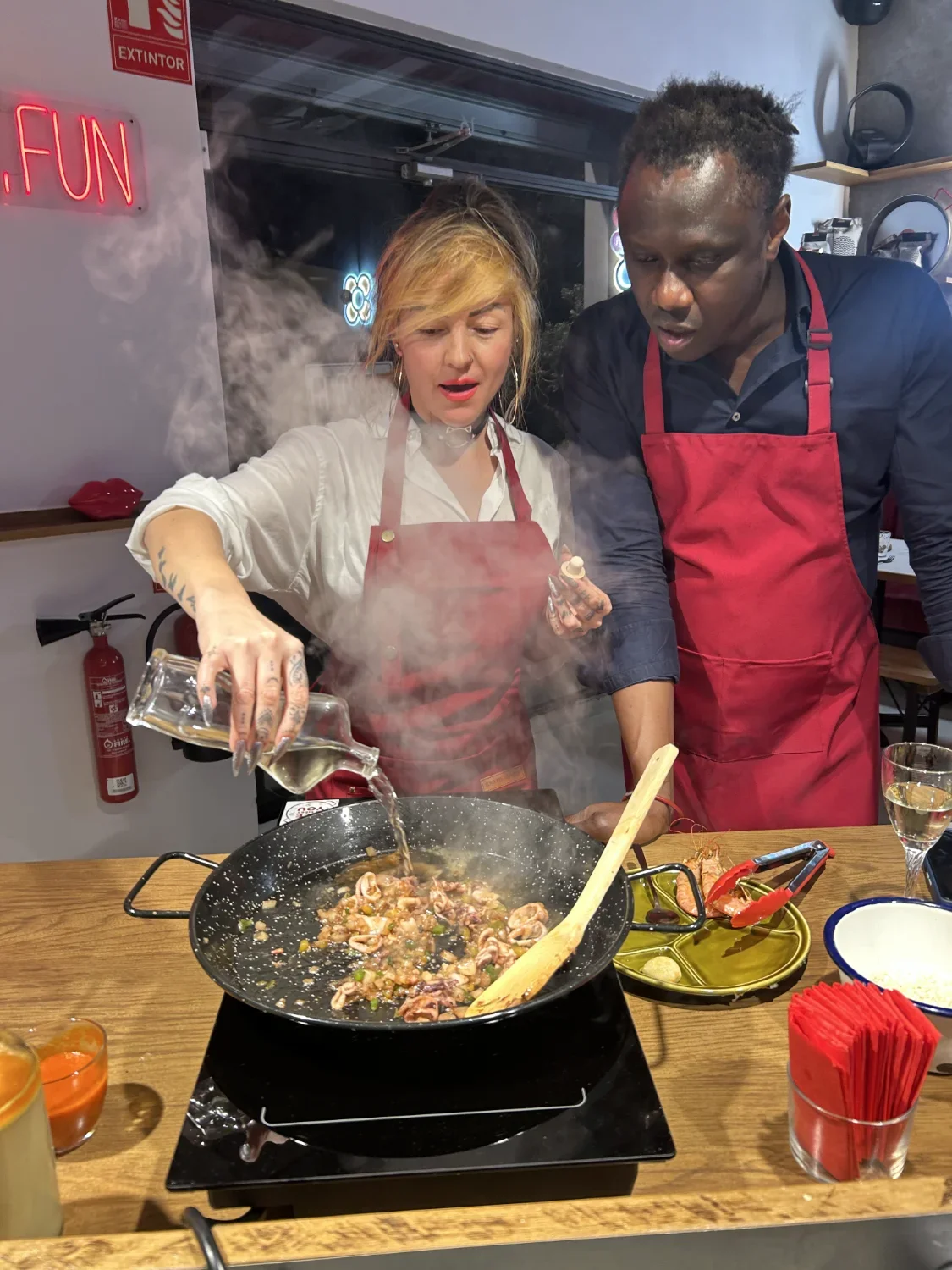
The sofrito — the base that defines the flavor
Before any rice or broth enters the pan, there's the sofrito: onion, garlic, ripe tomato, and often red pepper, cooked down slowly in olive oil until it turns into a thick, almost jammy paste. This isn't a five-minute step. A proper sofrito can take twenty to thirty minutes over low heat, and that patience is the entire point — it's where most of paella's actual flavor gets built, long before saffron or stock ever get involved.
The most common mistake is rushing it. Turn the heat up to speed things along and the tomato scorches instead of caramelizing, and you get a sofrito that tastes sharp and acidic instead of deep and sweet. The second most common mistake is treating it as optional — some shortcuts skip straight to canned tomato and call it done. You can taste the difference immediately, and so can anyone who's had the real version.
Getting the broth and rice right
Once the sofrito is done, the broth and rice take over — and this is a big enough topic that we've written the full breakdown separately. The short version: the rice variety matters as much as the technique, and a homemade stock will always outperform a stock cube, because you're not just adding salt — you're adding a base flavor the rice will spend the next twenty minutes absorbing.
What's worth adding here is the ratio discipline paella demands. Unlike risotto, you don't stir paella rice once the broth goes in — you add the exact amount of liquid up front and let it do its work undisturbed. Too much broth and the rice turns soft with no texture; too little and it won't cook through. This is the step where guesswork punishes you the most, and where doing it once with your own hands teaches you more than any written ratio ever will.
The socarrat — what it is and how to know it's right
Socarrat is the thin, caramelized layer of rice that forms at the very bottom of the pan in the last few minutes of cooking, once all the broth has been absorbed and the direct heat starts working on the rice touching the metal. Done right, it's toasted and slightly crisp, with a nutty flavor that's completely different from the rice above it — not burnt, but right at the edge of burnt. It's the part regulars fight over, and the detail that separates a paella made with real attention from one that was rushed off the stove the moment the broth disappeared.
You'll know it's working by sound and smell before you see it: a faint crackle, and a toasted aroma rather than a bitter or smoky one. Pull it a beat too late and it crosses into actually burnt, which tastes nothing like socarrat and can't be salvaged. Pull it a beat too early and you lose the entire point of the last five minutes of cooking. The margin is narrow, and it's learned by ear and nose more than by a timer.
Why this is easier to learn by doing it than by reading about it
Every one of these three steps — sofrito, broth ratio, socarrat — depends on judgment calls that are hard to standardize on a page: how thick is "thick enough" for the sofrito, how the broth should look right before it's fully absorbed, what that crackling sound actually sounds like in the room. Reading about it gets you the theory. Standing over a pan with someone telling you "now, listen" is what actually makes it stick.
That's the whole premise behind Rice to Meet You's paella cooking class: you cook your own paella from sofrito to socarrat, guided step by step in small groups, in a real kitchen in El Raval — not a demonstration you watch, but the technique in your own hands, with someone correcting your timing in real time. If you've read this far wondering whether you'd actually get the socarrat right on your first try, that question answers itself faster in a two-and-a-half-hour workshop than in another article.